Travel to Belgium
Before you go to Belgium: the practical checklistAvant de partir
Belgium is in the Schengen area. Visitors from visa-exempt countries can stay up to 90 days in any 180-day period, and since the EU's Entry/Exit System (EES) started, your fingerprints and photo may be taken at your first Schengen border; it costs nothing. ETIAS, the future €20 travel authorisation, is not in operation yet. Service is included in restaurant prices, contactless cards work almost everywhere, and trains link every city without booking. The emergency number is 112.
In short
- Entry: Schengen rules. Visa-exempt visitors can stay up to 90 days in any 180 days; others need a Schengen visa. Check your passport on the Belgian Immigration Office site (dofi.ibz.be) and your own government's advice.
- EES: at your first Schengen entry, you may have to register fingerprints and a photo. No fee.
- ETIAS: not in operation yet. The EU will announce the start date several months ahead; the planned fee is €20. Do not pay any site that sells it now.
- Money: euro. Service is included; round up or tip 5 to 10% for good service. Every business must accept at least one electronic payment.
- Trains: no booking for domestic trains, fares by distance, 30% off for adults at weekends.
- Emergency: 112. Carry your passport: the law requires it.
Download the SNCB app and the 112 BE app before you land. The first shows every train, platform and delay in English and sells tickets; the second is the official Belgian emergency app.
In this sectionDans cette rubrique
Brussels Airport to the city centre: train, bus or taxi
Practical · Airport
Charleroi Airport to Brussels: shuttle, bus and train, or taxi
Practical · AirportEurostar from London to Brussels: times, fares and arrival tips
Practical · TrainsHow to take the train in Belgium: SNCB tickets and tips
Practical · TrainsBrussels public transport tickets: contactless, Brupass, the airport bus and night buses
Getting around · BrusselsLuggage storage in Brussels: station lockers, Lockerpoint and the airport compared
Getting around · BrusselsTipping in Belgium: restaurants, bars, taxis and hotels
Practical · Money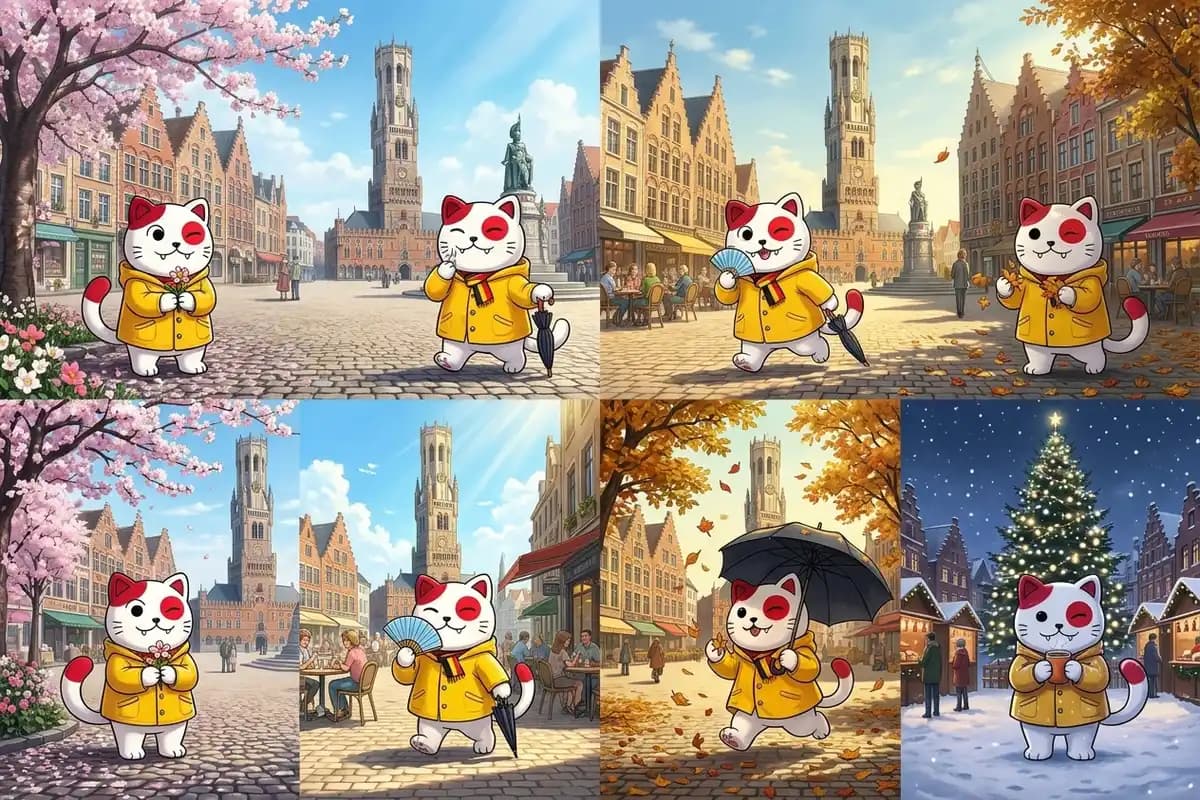
The best time to visit Belgium, month by month
Practical · Seasons
Brussels to Paris by train: times, prices and tips
Practical · TrainsBrussels to Amsterdam by train: Eurostar or Eurocity Direct
Practical · Trains
The Belgian coast tram (Kusttram): tickets, trains from Brussels and where to stop
Getting around · Coast
Entry: passport, EES and ETIASEntrée
Belgium follows the Schengen rules, shared by most EU countries plus Iceland, Liechtenstein, Norway and Switzerland.
| Point | What applies on November 27, 2026 |
|---|---|
| Short stay | Up to 90 days in any 180-day period, for visa-exempt nationalities |
| Passport (UK government's summary of Schengen rules) | Issued less than 10 years before you arrive, and valid at least 3 months after you leave the Schengen area |
| EES (Entry/Exit System) | Being rolled out across Schengen: fingerprints and a photo may be taken at your first entry; free |
| ETIAS | Not in operation; no applications collected; planned fee €20 |
| Visa | Needed for nationalities that are not visa-exempt; apply to a Belgian embassy or consulate |
Which passports are visa-exempt changes from time to time: we do not list them from memory. Check the Belgian Immigration Office (dofi.ibz.be), the EU's official "Travel to Europe" site (travel-europe.europa.eu) and your own government's travel advice before you book.
ETIAS scams: as ETIAS is not running, any site that takes money for it today is not official. The EU will publish the start date several months before launch.
Weather and when to goMétéo
Belgium is mild and damp all year: average highs of about 6°C (43°F) in January and 23°C (74°F) in July in Brussels, and rain in every month. April is the driest; December the wettest. Pack a rain jacket in any season. Month by month: the best time to visit Belgium.
Getting there and aroundTransports
- Brussels Airport (BRU): trains to Brussels-Central in about 17 minutes, with a €6.90 airport supplement. Brussels Airport to the city.
- Charleroi Airport (CRL): about an hour south of Brussels, no station of its own. Charleroi Airport to Brussels.
- From London: Eurostar to Brussels-Midi. Eurostar from London.
- Trains in Belgium: SNCB, fares by distance, no reservations, valid on any train that day. How to take the train.
- Brussels metro, tram and bus: tap a contactless card, €2.40 a trip, never more than €8.50 a day. Brussels public transport.
- Bags between hotels: lockers in the main stations. Luggage storage.
- Car: not needed for the cities, all linked by train. Useful for the Ardennes. Compare day trips: day trips from Brussels.
LanguagesLangues
Belgium has three official languages. Flanders (Bruges, Ghent, Antwerp, Leuven, Mechelen, the coast) speaks Dutch; Wallonia (Liège, Namur, Dinant, Mons, the Ardennes) speaks French; Brussels is officially bilingual, French and Dutch; a small area in the east speaks German. Station and street names change with the language: Brussels-Midi is Bruxelles-Midi in French and Brussel-Zuid in Dutch, and Antwerp is Antwerpen. English is widely understood in tourist places, especially in Flanders and Brussels.
Money, cards and tippingArgent
- Currency: the euro.
- Cards: every business must offer at least one electronic payment with no surcharge. It may be Bancontact only, the Belgian debit card, so carry a little cash as a backup.
- Cash: totals paid in cash are rounded to the nearest 5 cents. Most places refuse €200 and €500 notes.
- Tipping: service is included in menu prices. Round up, or leave 5 to 10% for good service in a restaurant; round up in bars and taxis. Tipping in Belgium.
- Museums: some are free on the first Wednesday or first Sunday of the month, and many close on Mondays.
Phone and dataTéléphone
Phones from EU countries roam at home prices in Belgium. From elsewhere, a data eSIM is usually cheaper than your home operator's roaming.
Safety and the lawSécurité
The UK government's advice for Belgium (updated October 17, 2026) is a good summary for any visitor:
- Pickpockets: theft is common in crowded areas. Take extra care at Brussels-Midi (the Eurostar station) and Brussels-North, on international trains to Paris and Amsterdam, in busy central Brussels and around Schuman. Luggage has been stolen from the racks at the end of high-speed train carriages, just before the doors close.
- Taxis: use only official, licensed taxis; never one that stops to offer a ride.
- Passport: you must carry it with you at all times.
- Face coverings: clothing that hides the face in public places is illegal, with a fine of up to €137; there is no exemption for tourists.
- Drugs: possession of any illegal drug, including cannabis, is a serious offence.
- First World War battlefields: stay on the footpaths, and do not touch anything suspicious; old munitions still turn up.
- Emergency: call 112 for ambulance, fire and police, or use the 112 BE app.
FAQ
Do I need a visa to visit Belgium?
It depends on your passport. Belgium follows the Schengen rules: visa-exempt nationalities can stay up to 90 days in any 180-day period; others need a Schengen visa. Check dofi.ibz.be and the EU's travel-europe.europa.eu.
Do I need ETIAS for Belgium?
Not yet. ETIAS is not in operation and no applications are collected. The EU will announce the start date several months before launch; the planned fee is €20.
What is the EES?
The EU's Entry/Exit System. At your first entry into the Schengen area, your fingerprints and a photo may be taken at the border. Registration is free.
Do you tip in Belgium?
It is not required: service is included in prices. Rounding up, or 5 to 10% in a restaurant for good service, is normal.
What is the emergency number in Belgium?
112, for ambulance, fire and police. The official 112 BE app also works.
Can I pay by card everywhere in Belgium?
Almost. Every business must offer at least one electronic payment, but some accept only Bancontact, the Belgian debit card. Carry some cash as a backup.
Sources
- UK Foreign, Commonwealth and Development Office, Belgium travel advice (entry requirements, EES, safety and security, laws, emergency number; updated October 17, 2026): gov.uk, checked November 27, 2026
- European Union, ETIAS (not in operation, €20 fee): travel-europe.europa.eu, checked November 27, 2026
- European Union, Entry/Exit System: travel-europe.europa.eu, checked November 27, 2026
- Belgian Immigration Office: dofi.ibz.be, checked November 27, 2026
- European Union, Your Europe, mobile roaming costs (roam like at home in the EU): europa.eu, checked November 27, 2026
- Royal Meteorological Institute (IRM / KMI), normals at Uccle 1991–2020: meteo.be, checked November 26, 2026
- Payments, tipping, cash rounding: see tipping in Belgium, checked November 2026
- Trains, airports and Brussels transport: see the linked guides, checked November 26 and 27, 2026
Book your tripReservar
Some links earn us a commission at no extra cost to you. It never changes which place we recommend.